
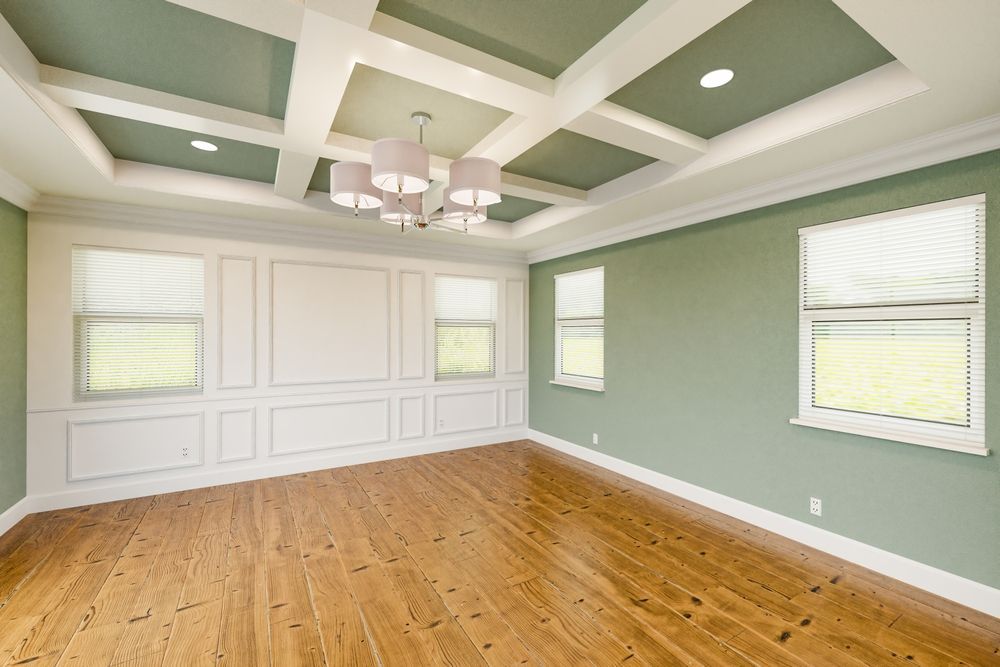
Finishing Details That Complete the Room
Custom Trim in Sneads Ferry for updating baseboards, crown molding, and door casings in remodeled or existing spaces
Rooms feel unfinished when baseboards don't cover gaps between flooring and drywall, door casings sit misaligned, or crown molding profiles don't match throughout the home. Onslow Elite Services installs custom trim that covers these transitions cleanly, using profiles selected to complement existing woodwork or establish a consistent style during renovations. Installation involves cutting precise miters at corners, coping inside joints so molding profiles nest together without gaps, and fastening trim to studs or blocking rather than relying on adhesive alone. The process turns rough drywall edges and flooring gaps into clean lines that define room boundaries.
Trim installation addresses specific problems: baseboards hide the expansion gap required around hardwood and laminate flooring, door casings cover the shim space around jambs, and crown molding conceals the uneven joint where walls meet ceilings. Each piece is measured and cut to fit the actual dimensions of the space, accounting for walls that aren't plumb and corners that aren't perfectly square. Paint-grade trim uses finger-jointed pine or MDF that accepts caulk and paint smoothly, while stain-grade work requires clear hardwoods with consistent grain.
Arrange a consultation to review trim options and receive an estimate based on the linear footage and profile complexity your project requires.
Why Trim Installation Affects Room Appearance
Trim installation quality shows in the tightness of miter joints at corners and the alignment of reveals around doors and windows. Installers cope inside corners by cutting the profile of one piece to fit against the face of another, creating a joint that stays tight even as wood expands and contracts with humidity changes. Crown molding is cut using compound angles that account for both the wall corner and the tilt of the molding itself, requiring precise saw settings to avoid gaps.
After installation, you see straight lines where walls meet floors and ceilings, and door frames that align symmetrically around openings. Corners meet without gaps or overlaps, and nail holes disappear beneath filler and paint. The trim itself sits flush against walls because installers shim behind pieces where drywall dips or studs bow, creating a flat surface for caulk and finish coats. Onslow Elite Services matches existing trim profiles when adding to older homes, sourcing moldings that replicate discontinued patterns or milling custom profiles when exact matches aren't available in stock sizes.
Custom trim also includes window stools, aprons, and casings that frame openings and provide a finished edge where drywall returns meet jambs. These components are cut to specific widths and projection distances, ensuring consistent reveals and proportions across all openings in a room. The work is affordable relative to its visual impact, often costing less than flooring or paint while significantly improving how finished spaces appear.
Homeowners considering trim upgrades often ask about material choices, installation methods, and how new trim integrates with existing woodwork profiles and finishes.
What Property Owners Usually Ask
What trim material should I use for painted finishes?
Paint-grade trim uses finger-jointed pine or MDF, both of which provide smooth surfaces that don't show grain or knots through paint—MDF stays dimensionally stable in humid conditions like those in Sneads Ferry, reducing joint separation caused by wood movement.
How do you match trim to existing molding profiles?
Installers bring samples of existing trim to lumber yards to find matching stock profiles, or take profile tracings to millwork shops that can replicate custom patterns on shapers or routers when exact matches aren't available commercially.
When should crown molding be installed during a project?
Crown molding goes up after drywall finishing and painting are complete but before final touch-ups, allowing painters to caulk joints and apply finish coats without taping off ceilings—installation before painting saves labor but requires careful handling to avoid damage.
What causes gaps to open in trim joints over time?
Wood expands and contracts with humidity changes, and butt joints separate as material shrinks—coped inside corners resist gapping better than mitered joints because one piece nests into the other rather than relying on glued end grain contact.
How much does trim installation cost compared to other upgrades?
Trim typically costs less per linear foot than hardwood flooring or tile work, making it a high-impact, low-cost way to improve room appearance—complex profiles and stain-grade hardwoods increase cost, while simple paint-grade baseboards and casings remain affordable.
Onslow Elite Services installs baseboards, crown molding, door casings, and window trim that provide clean finishing details throughout Sneads Ferry homes. Call (910) 508-0135 to discuss profile options and schedule an installation estimate based on your room dimensions and trim style preferences.